
Why Some Website Redesigns Fail Even When the New Site Looks Better
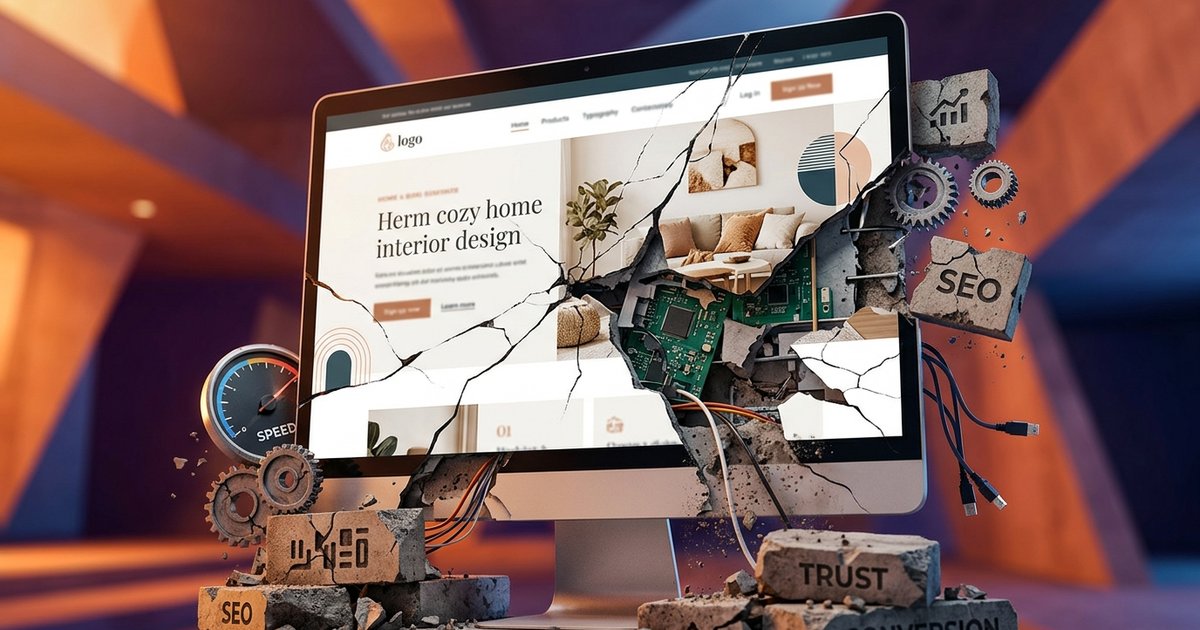
Looking good is not the same as working well
A lot of business owners invest in a website redesign and end up disappointed. The new site looks polished, the photos are great, and the layout feels modern. But the enquiries do not improve. Sometimes they drop.
This is more common than most agencies will admit. A failed website redesign is rarely about the visuals. It is almost always about what sits underneath them.
The most common reasons a redesign goes backwards
The messaging got cleaned up but lost its meaning
When designers tidy up a website, they often cut copy to make things look cleaner. Short headlines and minimal text can look sharp, but if a visitor cannot quickly understand what you do, who you help, and why they should choose you, they will leave.
Clear beats clever every time. If your homepage cannot answer those three questions in the first few seconds, the design does not matter.
The calls to action were treated as an afterthought
A website without strong calls to action is just a brochure. Many redesigns focus on layout and aesthetics but leave the calls to action weak, buried or missing altogether.
Every page on your site should guide the visitor toward a next step. That might be calling you, filling out a form, booking a consultation or reading something that builds trust. If those prompts are not obvious and repeated, visitors drift away without doing anything.
The new site is slower than the old one
Modern design tools and full-screen video backgrounds can create a beautiful result on a designer's screen. But on a mobile connection in Burleigh or Beenleigh, a slow-loading page means people leave before they see anything.
Page speed is a direct factor in both user experience and search rankings. A redesign that adds visual weight without managing load time can quietly undo months of SEO progress.
SEO groundwork was not carried over
This is one of the most common causes of a failed website redesign. When a site is rebuilt, URLs can change, page titles get rewritten, heading structures shift, and content that was ranking well gets removed or rewritten without care.
If your old site was bringing in organic traffic, that traffic was built on signals Google had learned to trust. Wipe those signals without a plan and you can lose rankings that took years to build. A solid website redesign strategy includes an SEO audit before anything is changed and a redirect plan for any URLs that move.
The mobile experience was designed on a desktop
Most of your visitors are on their phones. If the designer built the site on a large monitor and treated mobile as a secondary check at the end, the result will show.
Mobile-first means thinking about tap targets, font sizes, form length, and how content stacks before worrying about how it looks on a widescreen. A site that works beautifully on desktop but frustrates mobile users will convert poorly regardless of how it looks.
Trust signals were removed in the name of simplicity
Reviews, credentials, case studies, photos of real people, years in business, local address details. These things build trust with a visitor who does not know you yet.
Redesigns sometimes strip these out to achieve a cleaner look. The result is a site that looks professional but feels anonymous. For a small business, trust signals are not clutter. They are doing real work.
Why website conversion depends on more than design
Website conversion is the percentage of visitors who take the action you want them to take. Good design can support conversion, but it cannot create it on its own.
Conversion comes from clear messaging, fast load times, obvious next steps, content that matches what the visitor is looking for, and a site structure that makes it easy to move from interest to action. Design is the wrapper around all of that. If the content inside the wrapper is weak, the wrapper does not help.
What a thoughtful redesign actually looks at
Before touching the visuals, a good redesign process looks at what is already working. Which pages bring traffic? Which ones convert? Where are people dropping off? What is the site currently ranking for?
It also looks at what the business needs the site to do. A tradie who wants phone calls needs a different structure to a consultant who wants discovery bookings. The strategy should come before the design brief, not after.
From there, the work involves writing clear page content, building a logical site structure, planning for page speed from the start, carrying over SEO foundations, and making sure every page has a clear purpose and a clear next step.
Ready to redesign your website the right way?
At Spray Media, we build custom-coded websites for Gold Coast businesses that load in under a second and are built to work with AI search tools like ChatGPT and Google AI. We have seen what goes wrong in redesigns and we build our process around avoiding those mistakes.
If you are thinking about a redesign, rebuild or migration and want a straight conversation about what your site actually needs, talk to Mark and get an honest picture of where to start.

Written by
Mark SprayMark is the founder of Spray Media, a Gold Coast web design and digital marketing agency. With over 100 projects delivered and consistent 5-star reviews, he helps small businesses and tradies get more customers through websites that actually rank on Google. Before Spray Media, Mark built a national weighted blanket company recognised in Australian Parliament for its community employment initiatives.